



In today’s fashion environment, streetwear is particularly prevalent amongst the younger generations. Within that, a large part of this genre’s origins can be traced back to skate culture and its evolution over decades. Even the big names in the industry, like Adidas and Nike, now have separate brands that focus on this aesthetic alone. And let’s be honest, who doesn’t enjoy the gritty, raw, and youthful imagery that brands like Supreme, Vans, and Stüssy encapsulate? Young people connect not only with the collections, but with something more than that. They connect with what these brands communicate: freedom, counterculture, and extreme individualism through the visuals they sell.
Almost all skateboarding brands possess a similar visual tonality, with, of course, their unique brand accents to reinforce their identities. A grainy image of a young person mid-air, doing a kickflip, has enough power to communicate freedom from society. And we all know that one person who doesn’t really skateboard but dresses like someone who does. It’s because they identify with the belief system that surrounds this culture. It’s something I have observed for a while, which made me curious about how the visual identity of this subculture has developed and evolved since its conception.
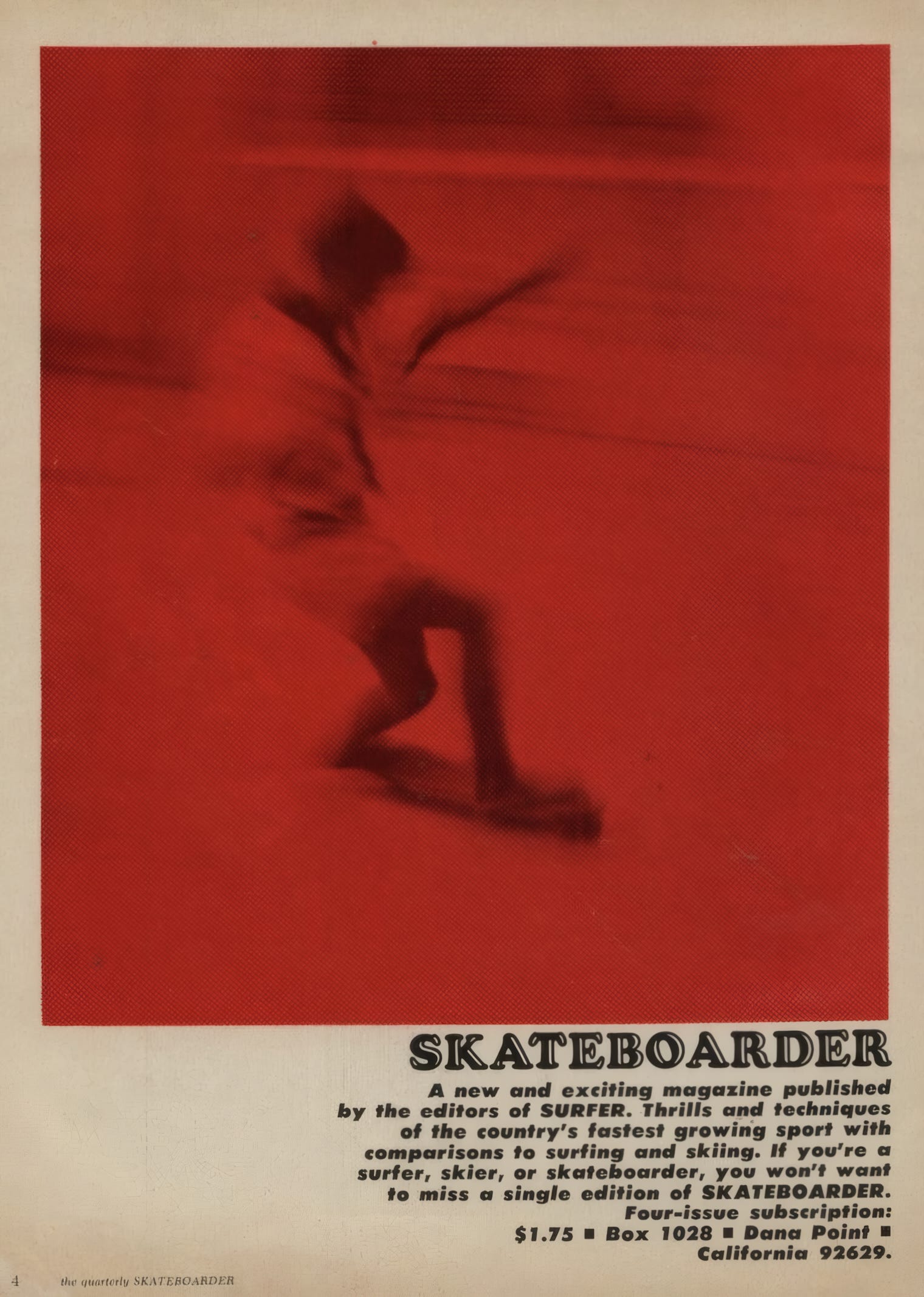
The roots of the sport’s identity lie in the early surfing culture of Southern California in the mid-1960s. It started with humble sidewalk surfing, using wheeled boards to replicate surfing manoeuvres on the ground. Early magazines like The Quarterly Skateboarder gave this hobby a voice and helped shape skateboarding’s representation in the media. Even in the early issues, the photography communicated a sense of adventure through motion blur, shutter drags, and alternative printing techniques. But it still felt like the documentation of a hobby in its infancy. Shortly after this initial boom, the recreational activity saw a decline in popularity due to safety concerns, leaving only a few to pursue it more seriously.
In the years that followed, better equipment started to roll out, and the introduction of polyurethane wheels gave skateboards better speed and traction, sparking another wave of interest. The Quarterly Skateboarder relaunched as Skateboarder magazine under photographer Warren Bolster, who gave opportunities to up-and-coming photographers and skateboarders to capture an insider’s view of the scene. One of the most renowned names to emerge from this landscape was Craig Stecyk. Craig had a unique photographic style that featured up-close images of skateboarders and their raw emotions, particularly those from the gritty coastal neighbourhood of Dogtown in Los Angeles.