



Editor’s Note: I wanted to go deeper on the story of Jeff Koons because I constantly hear his name thrown around in a way that sounds like everybody hates him. As I started to look into it, I realized that our financial and political correspondent, Rameen, was the perfect man for the job. This is the heavily edited version. Not sure if the rough draft he sent me could have been published on the internet. - Everett
What’s up, art purveyors? I’m here to spell out for you why Jeff Koons is who he is and why most of the creatives out there hate the guy. To me (FYI, a lot of this piece is going to be my opinions applied to society, so fair warning), a lot of it has to do with the fact that Koons is essentially a modern bastardization of what I consider art. While I do believe art as a whole is something that’s fluid and constantly changing, what it has become recently is just too many standard deviations away from where I’d want it to be.
Don’t get my words twisted now, I love how you can track art history from the Roman Era, through the Gothic, all along the Renaissance, into Impressionism, and to the Contemporary art we see today. (That’s with me skipping through countless other periods and styles of art that are amazing and glazeable in their own right). The fact that I can go and see what someone who ate porridge and died of the black plague caught in the neighborhood brothel saw as art is pretty incredible.
Shit, you can even track the evolution of art by looking at a singular artist’s progression. Let’s take Picasso, he starts painting portraits that look pretty normal, and slowly descends into art that is essentially a POV of someone with undiagnosed schizophrenia. That rocks, and it’s interesting. It keeps you coming back for more. Picasso’s been dead for 70 years, and I’m still here mentally masturbating to the composition of his shapes during his cubism arc.
All this nostalgiamaxxing makes you think about the modern state of the art world. This takes me down a train of thought I don’t really enjoy. Ask me about art history, and my brain immediately goes to the immortal work of the masters, immersive nature scapes from Monet, the melty and brainfucky shit from Dali. Ask me about the state of modern art, though, and my brain goes to $100M+ auctions, incestuous art dealings, money laundering, and access restricted by expensive museum tickets.
This is where Jeff Koons is important. I mean, he’s one of the most famous contemporary artists. If you ask someone about him, they don’t go on some diatribe about the efficacies of his work or that he is a master of his craft. Instead, just start talking about how much his stuff sells for and how much bread he’s stacked. Which probably isn’t great, but he definitely has his glazers. Some beauty is in the eye of the beholder type shit.
Regardless of what you think about Big Jeff, in my opinion, he’s a microcosm of the current capitalistmaxxing culture of the art world, and because of that, I think it’s important to understand how he came to be.
I’m not a Freudian, so I don’t really care about his childhood or whether or not he wanted to crack his mom, but one thing I found interesting was that Koons seemed to always be a hustler. He grew up selling gift wrap and candy door to door, and even would go and sell Coke (beverage, not the fun powder) on the local golf course to old money heads who’d be playing. This hustler mindset seemed to have been imprinted into the fleshy wrinkles of his brain’s lobes because he brought it up years later when asked about the commercial nature of his work.
“When I was a child, I went door-to-door to sell gift wrap, sweets, and chocolates. I was brought up to be self-reliant.”
His affinity for sales has always seemed to go hand in hand with his love for art. This trend has followed him through every phase of his life. After graduating from art school, he started working at the MoMA as a front desk intern. Allegedly, he was really good at this. Not in the sense that he was the best at greeting people or somehow the Lebron James of handing people tickets. Instead, it was to the point that everyone from this era of his life said that he was a savant at peddling the museum’s products to people who were coming in.
Koons, at this point, was still in the trenches, navigating the seven circles of hell that come with trying to make it as an artist in the modern age. After 2 years of working at the MoMA, he was like, “fuck this shit, I’m tired of being poor,” and went and got his broker’s license to sell commodities on Wall Street. I’m guessing his thought process was something like “I’m poor and the art I wanna make costs money. Everyone is printing money from the sky on Wall Street. I’m good at selling things to people, so let me do that.”
From what it seems, he was good at this. At least I think he was. The specifics of his career aren’t super verifiable because his own accounts contradict each other, and there weren’t robust record-keeping processes at the companies he worked for because everyone was doing mounds of pure [insert powdered substance] and cracking strippers in the office as they sold cotton futures to unsuspecting housewives in Toledo. Koons is a sales super chad, so he was probably good at this too.
Regardless of the particulars of his career on Wall Street, it was able to fund him creating Rabbit, which eventually sold for $91 M in 2019 to an “anonymous buyer” (probably some Saudi oil baron). For whatever reason, people really liked the chrome bunny, and Koons used this attention to force his way into the spotlight of Ileana Sonnabend, the same art dealer who repped Andy Warhol.

Now that Koons had the stamp of approval from Sonnabend, it was just a matter of time before he was able to capitalize on her clout to framemogg everyone. His next collection, Banality, which is basically just a rip-off of Hummel figurines, was next.
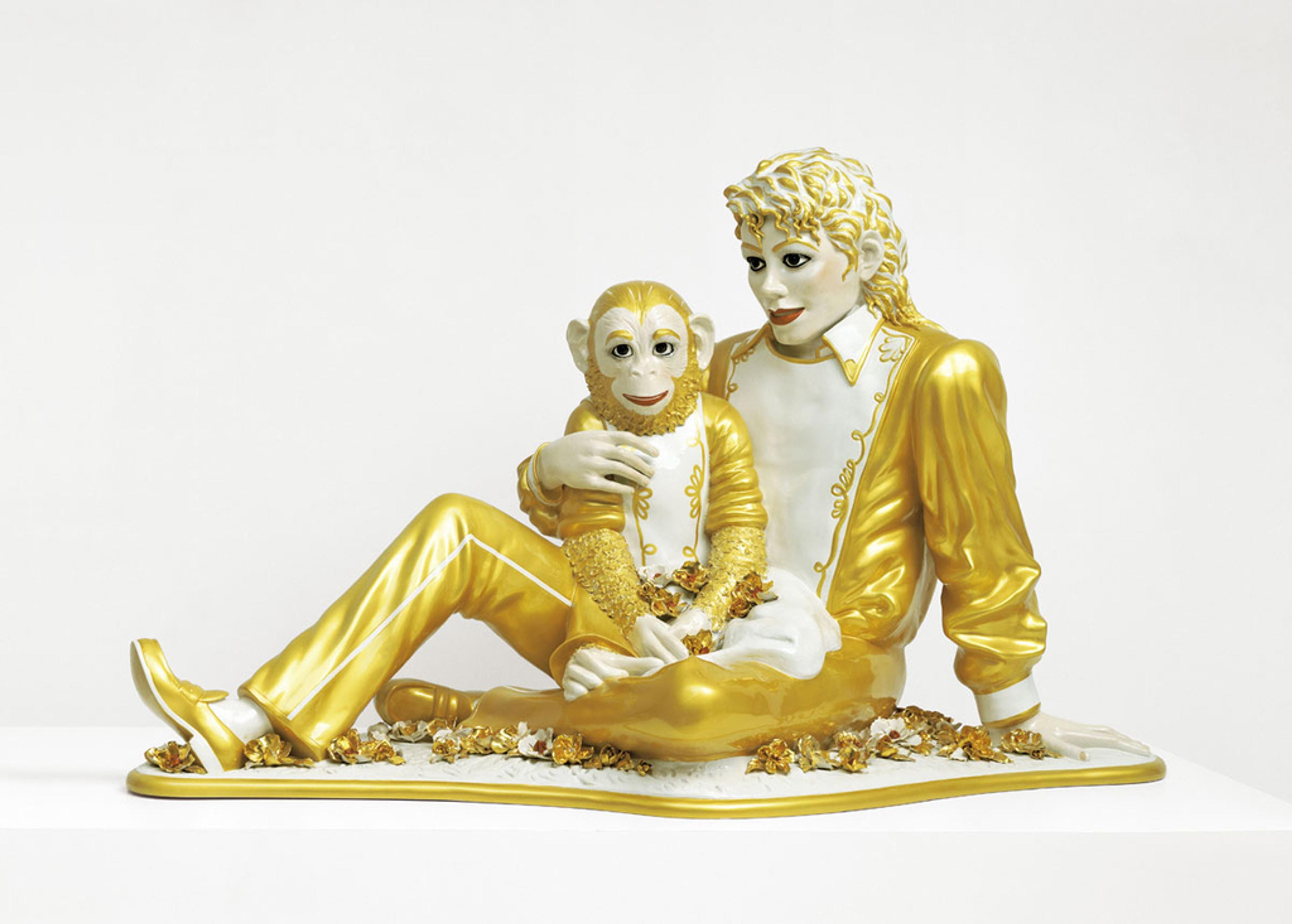
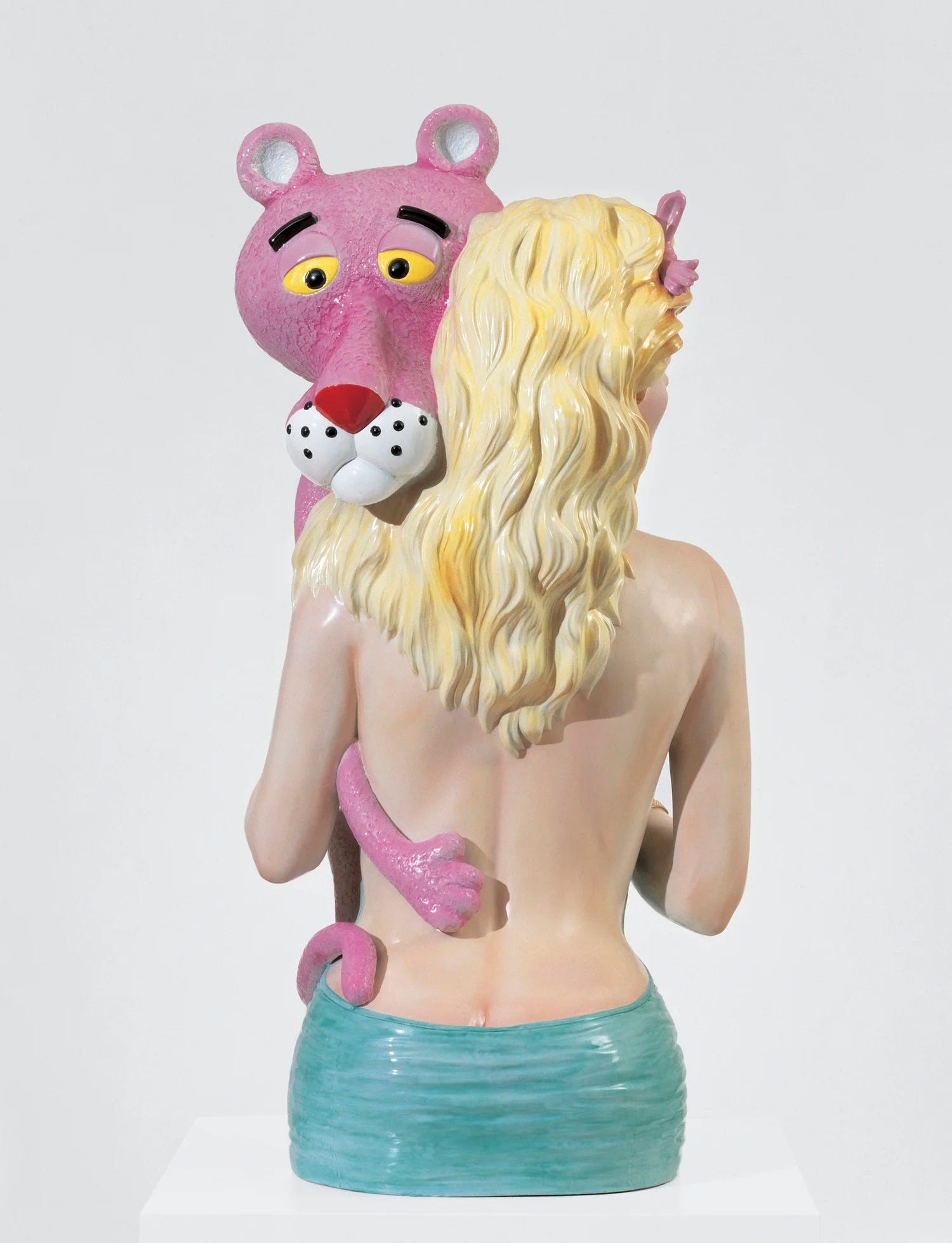
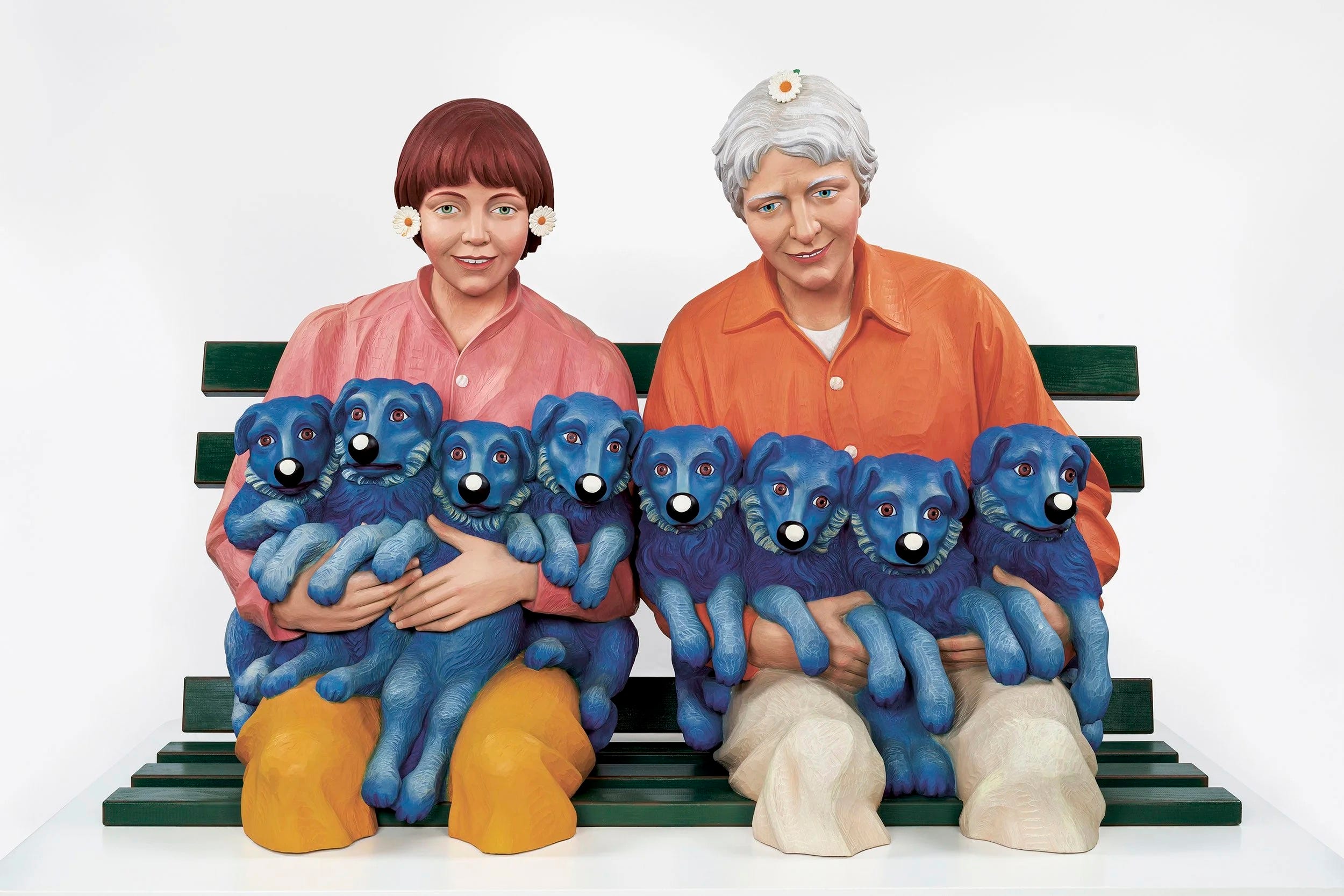
This one went bonkers. Everyone was glazing it, and most of the discussion wasn’t “This art is so interesting, holy shit he’s so talented” but rather “Wow, this is so kitsch” or “Wow, I wonder if he got Michael Jackson’s permission to portray him as a porcelain figure holding his monkey bubbles,” (he didn’t). Nevertheless, this is what solidified Koons as a top dog in the contemporary art game and got him to the point where you could say, “Yeah, this guy made it.”
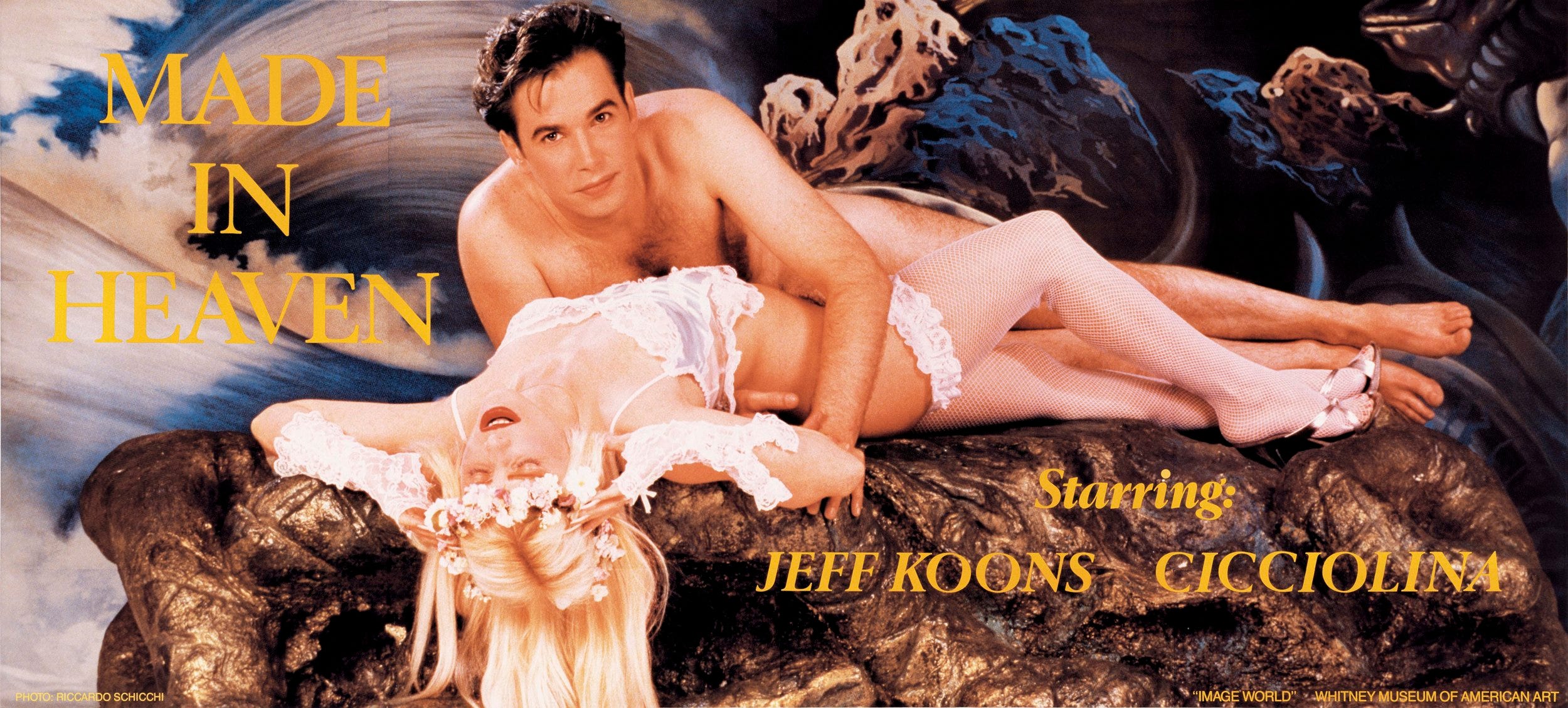
The mainstream success of Banality is interesting to look at, too. People point heavily to its marketing campaign as one of the main contributors. It was basically just pictures of him doing peculiar activities and photos of him with some huzz. The ads obviously have some connection to the actual collection, but not really. Imagine if Dali promoted The Persistence of Memory by putting himself on a billboard flexing with an AP like Shedeur Sanders. It worked, and now Koons was certified as a star in the art world.
After this, he started living like Derek Zoolander for real. He started dropping new collections; his Celebration series (the balloon animals) is a direct comparison to Zoolander’s renowned Blue Steel look in terms of their respective magnum opuses (opi?). He went on to become one of the most prolific and successful artists ever. He has sold over a billion dollars at auction, which is just crazy numbers for someone who put basketballs in a saline solution. Yes, he made an entire collection, Total Equilibrium, where he mixed saline and water, and then put basketballs in it. Sold them for $2-15mm each (lmao). The dude made a sculpture of a lobster and put it in the Palace of Versailles.
He married an adult matress actress, as well, which is a great story. Basically, he was flipping through a euro smut magazine (he deadass says he was doing this as research for a new collection) and locked eyes with the image of a huzz named Cicciolina. He straight up called the magazine after and rizzed her up. They ended up getting married. Genuinely pretty rockstar.
They were married for a few years. He even made a whole collection of sculptures (Made in Heaven) and paintings that were just depicting him fornicating with her. He said this was his “baroque” collection. I don’t think I would personally define it as baroque. It’s literally just photos of them making love, but to each their own.
The story between him and his questionably famous wife ends exactly as you would predict, too. He files for divorce, she steals his son and absconds back to Italy. He doesn’t get to have a relationship with his kid, and she ends up becoming an Italian politician (obviously). Luckily for Koons, he and his son, Little Ludwig, reconciled years later and even dropped NFT projects at the same time. Of course, they both independently had the idea to create NFT projects. Scheming for money seems to run in this guy’s genes.
Koons has six other kids, too, so he’s obviously been fornicating pretty steadily for a while. Five are with his current wife, but there is one from his earlier years that he ended up putting up for adoption. I get it. He and his baby mama were both barely adults and straddling the poverty line. Interestingly enough, he credits this as a big motivator for becoming successful.
“It [made] me want to have more visibility so that my daughter could find me. I always hoped we could reconnect.”
This is so good. It’s like top 1% deadbeat dad behavior. I could see Future saying something like this before going into the studio and dropping a bar about pouring up a 4. “ Yeah man, I didn’t really want to make $400Ms off art, I just did it to reconnect with my long lost daughter”. Like bro, adoption records exist.
They did eventually reconnect though and by all accounts, he has a good relationship with Shannon, but I just thought that was so funny and unnecessary to say.
Regarding his creative process, Koons creates all his art in warehouses in Manhattan. Well, I guess it’s more accurate to say that he “oversees the creation of his art” in warehouses in Manhattan. He seems to be following the mold of Andy Warhol, but instead of transients creating the art in return for lodging and substances, it’s art graduates trying to make it, getting paid with W-2s and health plans.
Koons maintains that even though he isn’t the one physically creating the sculptures or even the one who is actually putting the brush to canvas, it is still 100% his art, and none of the credit belongs to the underlings he employs.
”I’m the artist, absolutely, but the collaborative aspect, the sense of community, is important to me,” Koons says. “But these are my visions. The only reason they exist is my vision.”
He’s been compared to Willy Wonka in this sense. The vision is his, but he has a wonderful little community of helpers to actualize what he’s concocting in his brilliant mind. That tracks. What doesn’t seem super Wonka-esque is the fact that he laid off half his staff in 2017, and they received zero (0) severance pay. He also fired his night staff right around the time that they were planning on unionizing.
It’s almost like Willy Wonka grew a pair of ovaries in his factory and proceeded to have a love child with Jeff Bezos. That’s Jeff Koons. A remarkable combination of ruthless capitalism gene-spliced with contemporary art. I’d bet money that Koons would have been a traditional finance chad if his dad hadn’t been an interior decorator. He quite literally did everything else a portfolio manager at a hedge fund would do: he married a woman with a questionable career path, neglected his kids, made a metric ton of cash, and even hung out with Jeffrey Epstein!
Yes, he actually went to a dinner at Epstein’s infamous New York townhouse in 2013. That’s not all, though! Epstein then went and visited Koons’s factory in Chelsea sometime afterwards. It’s unclear if this was before or after Koons performed his best Henry Ford impersonation in union busting, but it was 100% after Big Stein’s conviction of soliciting underage women and subsequently being registered as a PDF file.
This all culminates in the recurring theme that I saw all throughout the research for this piece. Although there were times I found myself pleasantly moved by some of his work, most of the time I was just thinking about the fact that this guy didn’t seem like an artist. To me, he’s a businessman who figured out how to win at the game of art.
This is why Koons is the perfect encapsulation of what Contemporary Art has become. He may not be the most technically gifted artist, but he cracked the code. He understood what he needed to do to get eyes on his work. Not the art purveyors and enjoyers, but the heads of galleries and art dealers. They don’t care about art in a purist sense; they care about making money. Koons understood how to create his own ascension, and subsequently, money spread on his haters.
In today’s artosphere (not sure if this is a word, just doing a play off manosphere), Koons gets hated on from an overwhelming amount of people who describe his art as “kitsch” (it is, in my opinion). His critics say he is using art as a money grab (there’s definitely some of that going on), and that he’s a narcissistic prick (I hate the way narcissist is thrown around, so not sure about this one). My favorite critique of him comes from Robert Hughes.
“He has the slimy assurance, the gross patter about transcendence through art, of a blow-dried Baptist selling swamp acres in Florida.”
Got his ass. If someone said this to me, I don’t know what I would do. I genuinely think the only way to come out on top is to steal his wife.
Now, even though I agree with a lot of these criticisms, I don’t think Koons is the one to blame. He just figured out how to take advantage of the system. The architects of the system are the ones who should have a lynch mob after them. The “prestigious” galleries, auction houses chasing the next record sale, the tasteless billionaires who are trying to clean their money. These are the ones to blame for the current state of the art world.
If you are an up and coming artist in today’s world, you are stuck in an extremely unfortunate catch-22. Becoming a successful artist in the present age is almost impossible.
You can’t get by anymore solely on the quality of your work. If you can’t optimize the algorithm to get more than 1,000 likes on TikTok, you’re going to have to sit on the sidelines and watch as Ashley Longshore paints a mound of [insert substance] on a Louis Vuitton bag.
It forces artists to focus on how to become great marketers. Which inevitably takes away from the quality of their work. So long are the days that a prominent family like the Medicis could comb the world for any child who knew how to draw shadows and put them in art camp to make masterpieces that stand the test of time. Now you get so-called “painters” split-testing Instagram reels showcasing their atrocious rendition of a Marlboro ad from the 80s, on a canvas they end up selling for $10k to a hypebeast that is going to place it right next to his KAWS sculpture in his Brickell high-rise.
This shift is why contemporary art is in the state it’s currently in. Years and years of the wrong behavior being reinforced and supported has made it so artists can’t focus their energy on their process. They have to become digital marketers, salesmen, and accountants. This is why you have someone like Jeff Koons, who creates pieces that don’t make people feel anything, yet he’s able to sell for millions.
We let these types of people ruin everything else in our world. Prediction markets are telling us to bet on whether Trump is gonna praise Allah, investment firms are buying up single-family homes, and insurance companies are denying care based on BS underlying conditions like ligma. The least they could do was just let us have art.
Raheem is a bit of a truth teller.🤺 Great article
lol there's literally corn of her drinking her own piss on these interwebz